Getting started
The best kids’ bikes for riding to school in 2026
What matters for a school commute (fit, weight, brakes, gearing), and three current 20-inch bikes that take different approaches.
By Dennis, from Atlanta · 4 min read
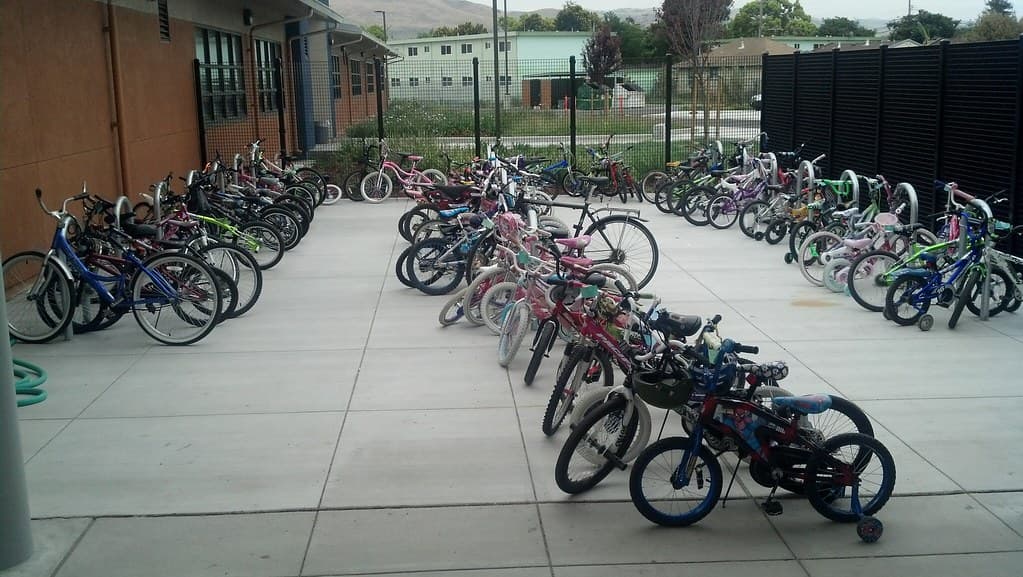
The best kids’ bike for riding to school is not necessarily the fanciest one or the one with the most gears.
For a school commute, I care about five things first: fit, weight, brakes a child can actually operate, gearing appropriate for the route, and reliability. A bike that looks great in a product photo but weighs half as much as its rider turns a small hill into a daily argument.
One note before the specifics: there are no affiliate links on this page. Nobody paid to appear here, and no link earns us anything.
Fit comes first
The AAP recommends a bike that fits the child now, not something oversized to grow into. For most elementary-aged riders moving into longer school trips, that means 20-inch or 24-inch wheels, sized by height and inseam, not age alone.
What to look for in a school bike
Low weight, because kids feel bike weight far more than adults do: a 15-pound difference between two bikes materially changes starts, hills and handling for a 50-pound rider. Child-sized brake levers and shifters their hands can actually reach; have your child operate them before deciding. Gears if the route is hilly: a flat mile needs almost none, a two-mile route with a sustained climb absolutely benefits. I live in Atlanta; around here, gears are not optional. Moderate all-purpose tires rather than heavy knobby ones if every morning is pavement. And easy accessory mounting, because a kickstand, lights, fenders and a way to carry a backpack all matter more once the bike is transportation rather than a toy.
Three current 20-inch bikes worth comparing
These are not the only good bikes; they are three different price and feature approaches. Specs and prices were checked against the manufacturers’ pages on August 22, 2026. Treat them as time-sensitive.
woom GO 4
The 20-inch woom GO 4 is built for roughly ages 6–8 and heights 45–51 inches, weighs about 17.2 pounds, and runs seven gears with child-specific controls. Very light, straightforward gearing, easy to handle on neighborhood routes. For a child riding mostly pavement and paths, this is the kind of simple, light setup I like.
Guardian 20 Inch Large
The Guardian 20 Inch Large sits at a distinctly lower price than the premium kids’ brands and uses Guardian’s SureStop system: one lever operating both brakes, designed against the classic over-the-handlebars mistake. The appeal is not exotic components; it is a properly sized bike a young rider can operate confidently, without premium-bike money.
Prevelo Alpha Three MkIII
The Prevelo Alpha Three MkIII is a 20-inch, eight-speed bike listed at 16.9 pounds, with hydraulic disc brakes and an 11–38T range, recommended for a 19–23 inch inseam. That is an unusually capable specification for a small bike, which makes it interesting for hilly routes, mixed pavement and light trail, and strong riders who will also use it recreationally. It is expensive, and for the right route it is worth it.
What about department-store bikes?
A lower-cost bike can absolutely get a child to school. The question is whether it fits and works. Before the first school ride: confirm the brakes work, inflate the tires, check the handlebars and stem, check the wheels, make sure the chain runs properly, set the saddle height, and make sure the child can operate the brakes. NHTSA’s first piece of bicycle-safety advice is to ride a bike that works, which matters more than the logo on the downtube.
Don’t forget the backpack problem
A perfectly good school bike becomes miserable when a heavy backpack hangs off small shoulders, and second-graders pack like they are moving out. Depending on the bike: a rear rack, a pannier, a basket. Keep straps away from wheels and drivetrain. NHTSA’s advice is to carry items in a backpack or strapped to the bike, never dangling.
Which one would I buy?
I would start with the child and the route. Flat route, newer rider: prioritize low weight and simplicity. Hilly route: low gearing and easy shifting. Rough paths: tire volume and stronger brakes. Short commute on a budget: fit and mechanical condition before premium components.
A kid who loves their properly fitted $300 bike is better equipped for a bike bus than a kid who is intimidated by a $900 bike that is too large. Once the bike is sorted, see whether a bike bus rides to your school.
Sources
Start one at your school
Publishing your route and stops is free, and stays free.
More field notes
 Getting started
Write a bike bus announcement a parent can answer
Before a family can say yes, they need the corner, the minute, whether a grown-up has to come, and who makes the weather call. The case for biking can wait.
10 min read
 Getting started
The PTA does not need to run the bike bus
A parent can lead the ride. The PTA can help families hear about it, find a couple of adults, and open the door to the school office, without taking on the whole thing.
9 min read
 Getting started
The easiest bike bus is once a week
One predictable morning is enough to build a routine. Pick a day your adults can repeat, publish the schedule, and let the ride grow from there.
10 min read