Safety
The bike hand signals kids actually need
Left, right, slowing, plus the handful of spoken calls a group ride actually uses.
By Dennis, from Atlanta · 3 min read

A child does not need a vocabulary of twenty cycling hand signals before riding to school. They need to communicate three things clearly and predictably: left turn, right turn, and slowing or stopping.
NHTSA recommends signaling before turning and riding predictably with traffic, with both hands on the handlebars except while signaling. The American Academy of Pediatrics gives children the same advice for the ride to school.
Left turn
Left arm straight out from the shoulder. Usually the easiest one for kids to remember, because the arm points where they are going. Before any turn, the child should also look for traffic, and skip the signal if making it would cost them control of the bike.
Right turn
There are two recognized versions. The clearest for children is the right arm straight out. The older convention, left arm bent upward at the elbow, dates from cars without turn signals, and both may be recognized depending on where you live. For a young rider, pointing clearly with the right arm is the one I would teach. Check your state’s rules if you are teaching formal road riding; signal law varies by state.
Slowing or stopping
Left arm extended down, palm facing behind you. In a group, pair it with the word: “Slowing!” A bike bus has riders behind you who may not catch a small hand movement, especially once the line spreads out.
Practice one-handed riding first
A hand signal is only useful if the child can make it without swerving. Away from traffic, have them ride straight, briefly lift one hand, point left, put it back; then the other side; then the stop signal. If the bike wanders every time a hand leaves the bar, they need more practice before signaling around vehicles.
Group calls are their own language
A bike bus is a group ride, and group rides run on a few spoken calls more than on formal signals: “Stopping!” means someone ahead is stopping. “Car up!” means a vehicle ahead. “Car back!” means a vehicle behind. “Hole!” or “Branch!” warns of an obstacle the riders behind cannot see yet. “Slowing!” means the pace is dropping.
One thing worth being precise about: a group call is a courtesy to the riders behind you, not a legal roadway signal. The law cares about the arm; the group cares about the voice. For younger children, many organizers prefer that adults make most of the traffic calls while kids concentrate on riding predictably.
Don’t let signaling create a new problem
The safest signal is not the longest one. Control of the bicycle comes first. Approaching a rough patch, a crowded intersection or a steep downhill, keeping both hands on the bars matters more than holding an arm out for five seconds. Signal early, return the hand, make the turn predictably.
A five-minute practice game
In a driveway or empty lot, call out random commands (“LEFT.” “RIGHT.” “STOP.”) while the child rides slowly and makes the signal without turning. Then reverse it: you signal, they shout what it means. Finish with a tiny chalk route where they signal before each change of direction. Five minutes, done. Enough to make the signals familiar without turning bike safety into homework.
For organizers
Pick your group’s communication rules once and use the same ones every week: which turn signals you expect, which calls adults make, who calls hazards, whether kids repeat calls down the line, and what happens when the group stops unexpectedly. A predictable system matters more as the group grows and riders stop all knowing each other. Write it down and send it to families before their first ride. It belongs in the same envelope as the organizer’s kit, next to the role cards and the first-ride checklist.
Sources
Start one at your school
Publishing your route and stops is free, and stays free.
More field notes
 Getting started
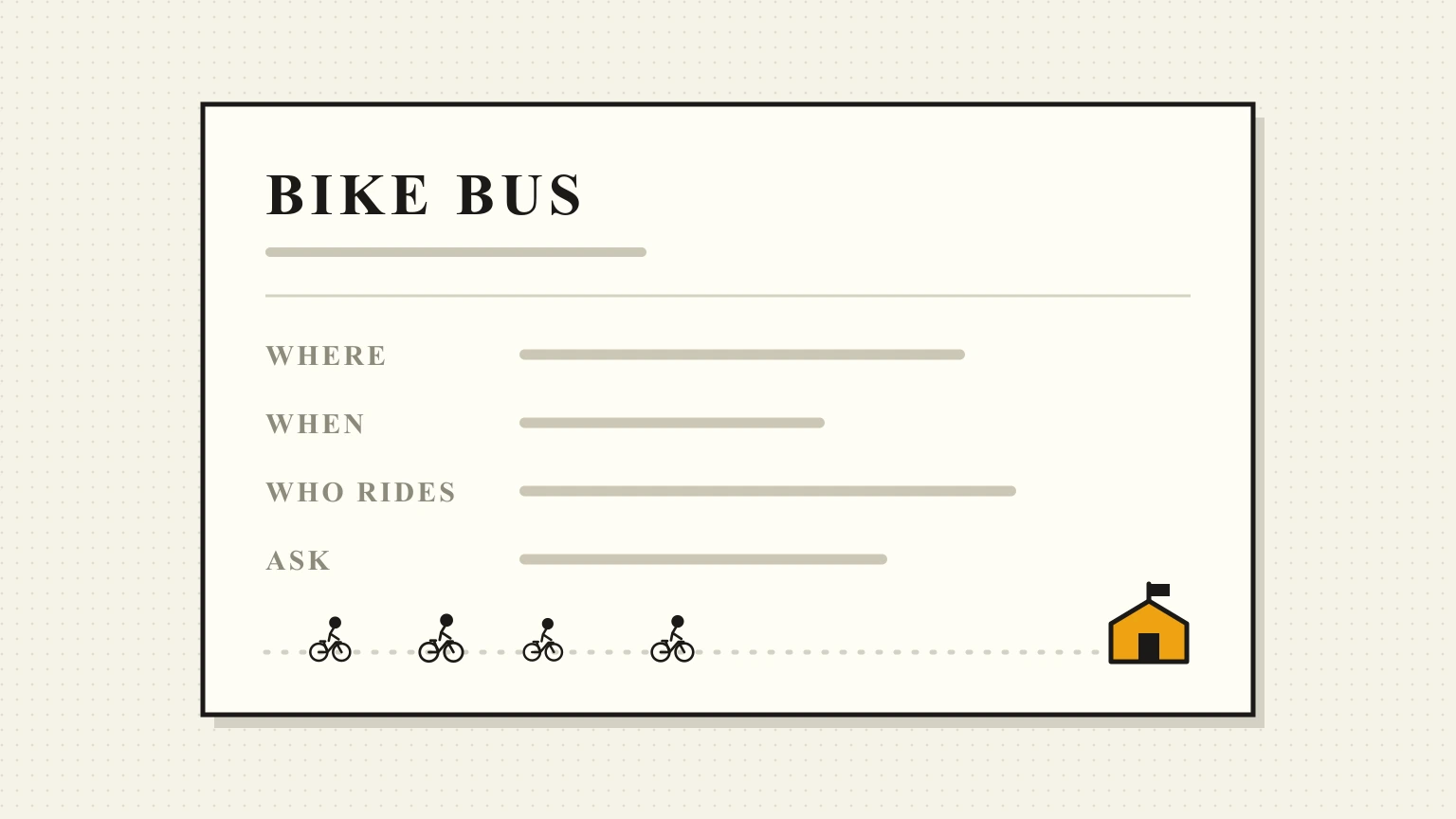
Write a bike bus announcement a parent can answer
Before a family can say yes, they need the corner, the minute, whether a grown-up has to come, and who makes the weather call. The case for biking can wait.
10 min read
 Getting started
The PTA does not need to run the bike bus
A parent can lead the ride. The PTA can help families hear about it, find a couple of adults, and open the door to the school office, without taking on the whole thing.
9 min read
 Getting started
The easiest bike bus is once a week
One predictable morning is enough to build a routine. Pick a day your adults can repeat, publish the schedule, and let the ride grow from there.
10 min read